Yes, the City of Niagara Falls will remove a tree on the grassy strip in front of your house if the tree is dead, severely diseased, or structurally hazardous. Because that strip—known as the tree lawn or municipal right-of-way (ROW)—is owned by the city, maintenance, pruning, and removal fall under the jurisdiction of the Niagara Falls Department of Public Works (DPW) Forestry Division.
Understanding the “Tree Lawn” and Municipal Right-of-Way
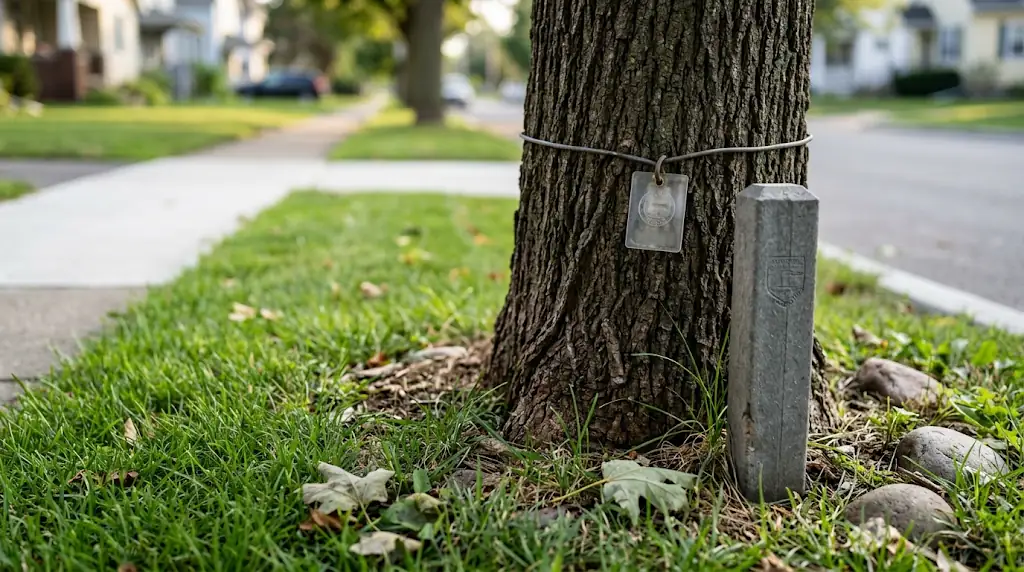
The grassy strip between the sidewalk and the street curb is legal city property, even though the homeowner is responsible for mowing the turf.
- Public vs. Private Status: Any tree rooted within this right-of-way easement is classified as a municipal street tree.
- Homeowner Restrictions: Homeowners cannot legally cut down, top, or severely prune a municipal right-of-way tree without an approved Forestry Permit from the city. Doing so violates municipal code (Chapter 927) and can result in civil fines or replacement penalties.
When Will the City Remove a Tree Lawn Tree?
The Niagara Falls DPW does not remove trees simply because they drop leaves, shed small twigs, block cosmetic views, or produce unwanted shade. The city adheres to strict arborist criteria for taxpayer-funded removals.
| Tree Condition | Will the City Remove It? | Action Taken by DPW Forestry |
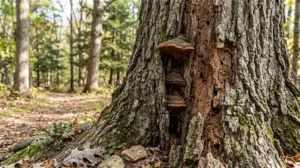
| Dead or Hollowed Trunk | Yes | Inspected, scheduled, and felled at zero direct cost to the homeowner. |
| Emerald Ash Borer Infestation | Yes | Assessed for structural brittleness; tagged for priority removal. |
| Heaved Sidewalk / Infrastructure Conflict | Case-by-Case | Root shaving or sidewalk realignment is attempted first; removal is a last resort. |
| Healthy Tree Dropping Debris | No | Request denied; property owners must maintain routine yard cleanup. |
| Branches Near Electric Lines | Referred to Utility | Coordinated with National Grid for high-voltage primary line clearance. |
How to Request Street Tree Removal Through the City
If a municipal tree in front of your home is showing obvious signs of decay, hollow cavities, or storm damage, follow this standard reporting procedure:
- Submit a Request to 311: Contact Niagara Falls City Services by dialing 311 (or 716-286-4311) or use the city’s online service portal to log a forestry maintenance ticket.
- Provide Key Location Data: State the exact street address, the approximate trunk diameter, and the specific hazard (e.g., large dead lead hanging over parked cars or active rot at the base).
- City Arborist Inspection: A municipal forestry inspector from the DPW yard on New Road evaluates the tree to determine if it meets removal criteria or requires safety pruning.
- Priority Queue: Dead trees threatening roads or primary structures take precedence. Non-emergency removals are placed on the municipal work schedule based on crew capacity and seasonal workload.
Can You Hire a Private Contractor to Remove a City Street Tree?
Municipal backlogs can take months for non-emergency situations. If you want a dead or problematic tree lawn tree removed immediately, you can hire a private tree care service, provided you complete the legal authorization process.
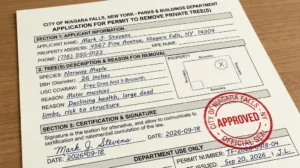
- Forestry Work Permit Required: You must submit a completed Forestry Permit Application to Neighborhood Services (1785 New Road).
- Contractor Credentials: The private contractor you hire must be named on the permit and must provide proof of municipal licensing, commercial general liability insurance, and workers’ compensation coverage naming the City of Niagara Falls as an additional insured.
- Cost Responsibility: If you choose to hire a private tree contractor rather than waiting for city crews, you are responsible for 100% of the removal and stump grinding costs.
Stumps and Turf Restoration After City Removal
When city forestry crews complete a tree removal on the curb strip, the work is performed in stages:
- Felling and Trunk Removal: The tree is cut down to a low stump, and large logs and chipped limbs are cleared from the roadway.
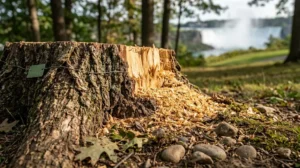
- Stump Grinding: Due to specialized equipment routing, stump grinding is handled separately from tree cutting. Stumps are typically ground several inches below grade.
- Lawn Restoration: After stump grinding, the depression is backfilled with mulch, topsoil, or grass seed. Under current city policy, Niagara Falls does not operate an automatic one-for-one tree replanting program, though residents can apply for a permit to plant an approved species at their own expense.
Get Guidance on Hazardous Niagara Trees
Navigating municipal right-of-way permissions versus private property tree work requires clear site boundaries and proper licensing. Whether you have a dead tree fully on your private lawn or need a licensed, insured contractor to fulfill a permitted street-tree removal, contact Niagara Falls Tree Removal via our contact page for dependable assessments and precision equipment.