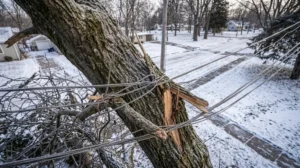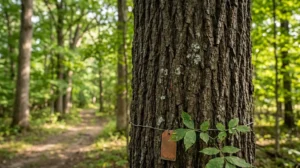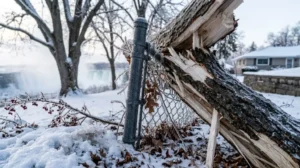
An oak or maple tree is dead and hazardous if it shows extensive canopy dieback, shedding bark with brittle, dry wood underneath, shelf fungus (conks) along the trunk base, or a sudden lean with soil mounding around the root plate. In Western New York, these signs indicate that the tree’s internal support system has decayed and will likely fail under heavy lake-effect snow, freezing rain, or high seasonal wind gusts.
6 Visual Signs of a Dead or Hazardous Hardwood
Oak and sugar or red maple trees are heavy, dense hardwoods. When structural integrity fails, these trees cause catastrophic property damage. Inspect your trees for these critical warning signs:
| Defect / Sign | What It Looks Like in the Field | Structural Hazard Level |
| Bark Sloughing & Bare Wood | Outer bark falls off in large sheets; exposed inner wood is dry, brown, or cracked. | High: Indicates dead cambium tissue and loss of protective layers. |
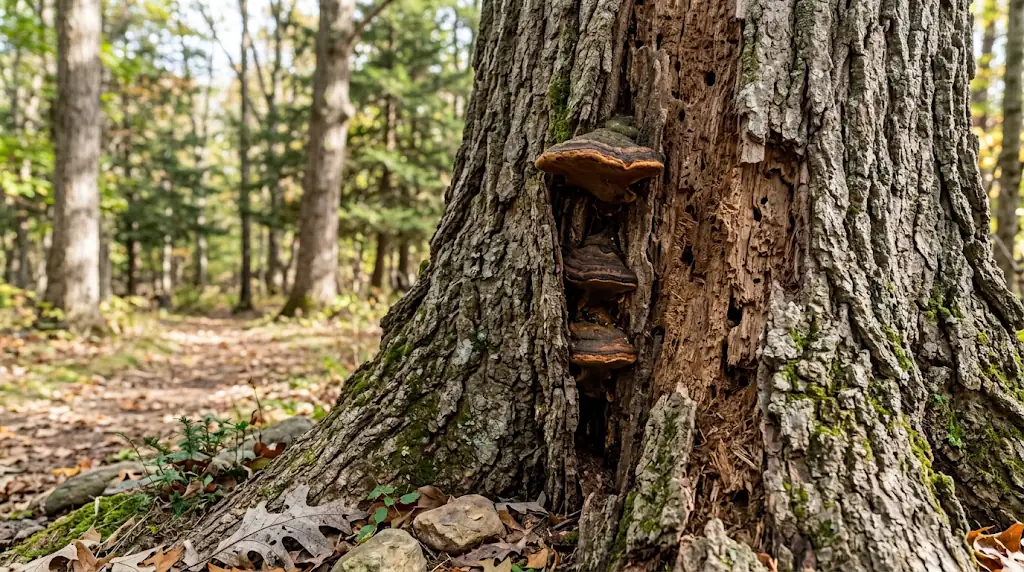
| Trunk Conks & Fungi | Bracket fungi, shelf mushrooms, or honey mushrooms growing from the base or main stem. | Severe: Visual proof of advanced heartwood rot or internal root plate decay. |
| Canopy Dieback & “Stagheading” | Large upper canopy limbs lack foliage, leaving bare, antler-like dead branch tips. | Moderate to High: Dead scaffold limbs snap unpredictably on calm or windy days. |
| Deep Trunk Cracks & Seams | Vertical splits penetrating deeply into the heartwood, often opposite each other. | Severe: Trunk is actively dividing; failure can occur during standard wind loads. |
| Soil Heaving & Leaning | The trunk leans at a new angle while soil mounds or cracks lift on the opposite side. | Immediate Emergency: Primary anchoring roots have severed; blowdown is imminent. |
| V-Shaped Crotches (Included Bark) | Multiple codominant trunks growing together in a tight “V” with pinched, rotting bark inside. | High: Prone to tearing apart down the center during freezing rain or ice storms. |
The Cambium Scratch Test: Dormant vs. Dead
Homeowners across Niagara County often mistake dormant trees for dead ones in early spring or late winter. You can perform a simple field test without specialized equipment:
- Select a low-hanging twig or mid-canopy branch about the diameter of a pencil.
- Use a pocketknife or thumbnail to lightly scrape away the top layer of outer bark.
- Check the exposed cambium tissue layer:
- Living / Dormant: The cambium layer underneath is bright green, moist, and pliable.
- Dead Wood: The tissue is dull brown, brittle, papery, and dry.
- Test multiple branches across several quadrants of the tree. If every test shows brown tissue and the branch snaps cleanly without bending, that entire structural section is dead.
Why Decaying Oaks and Maples Are Uniquely Hazardous in Western New York
Hardwoods common to the Niagara Frontier pose unique failure risks due to their weight and local climate extremes:
Mature Oaks (Red Oak and White Oak)
- Massive Structural Weight: A single mature oak limb can weigh several thousand pounds.
- Sudden Branch Drop: Stressed or diseased oaks can shed large, seemingly solid green branches in mid-summer without wind warning.
- Oak Wilt Threat: Caused by the fungus Bretziella fagacearum, oak wilt cuts off water flow, causing rapid canopy browning and complete tree death within a single season.
Maples (Sugar Maple and Silver Maple)
- Soft Heartwood in Silver Maples: Silver maples grow quickly but feature notoriously brittle, weak wood prone to massive structural cracks and rot pockets.
- Ice and Snow Loading: Lake-effect snow belts across Niagara County deliver dense, water-logged snow. Because mature maples hold broad, spreading canopies, ice accumulation creates leverage that splits unpruned or decayed crotches directly down the center.
Root Plate Rot: The Invisible Threat
A tree can still produce green leaves while its root structure is almost entirely rotten.
- The Role of Wet Niagara Soils: High groundwater tables and dense clay soils common in towns like Wheatfield, Pendleton, and Lockport trap moisture around root flares, promoting fungal root rot (Armillaria and Ganoderma).
- Warning Signs at the Base: Watch for clusters of mushrooms growing directly against the root flare or soft, spongy soil around the base of the trunk. When tapped with a wooden mallet, a solid trunk produces a dull “thud,” while a decayed trunk sounds hollow or reverberates.
Liability and Property Risk
Under New York State common law, allowing a clearly dead, cracked, or rotting hardwood to stand within striking distance of a neighbor’s property or a public right-of-way constitutes legal negligence. If a documented hazard tree falls onto adjacent homes, vehicles, or municipal utility lines, the owner can be held personally liable for all resulting property damage and emergency removal costs.
Secure Your Property Before the Next Storm
Dead oaks and decaying maples cannot safely bend under Western New York wind and snow loads. If you have a mature hardwood showing signs of crown dieback, trunk splitting, or fungal conks, eliminate the risk before it fails unexpectedly. Contact Niagara Falls Tree Removal directly on our contact page to schedule a hazard evaluation and professional removal.