An ash tree in Niagara County can typically be saved if it has lost less than 30% of its canopy and the trunk remains structurally intact. If more than 30% to 50% of the upper crown is dead, or if the bark is splitting with extensive woodpecker damage, the vascular system is destroyed and immediate removal is mandatory.
The Rule of 30%: Can Your Ash Tree Be Treated?
The Emerald Ash Borer (Agrilus planipennis) is fully established throughout Western New York and Niagara County. The beetle larvae feed directly on the inner bark (phloem and cambium layer), effectively strangling the tree’s ability to transport water and essential nutrients.
| Canopy Condition | Structural Status | Recommended Action | Viable Solution |
| 0% to 30% Canopy Loss | Vascular tissues mostly intact; minor top dieback. | Candidate for Treatment | Professional trunk injection using emamectin benzoate every two years. |
| 30% to 50% Canopy Loss | Significant vascular disruption; branch failure risk. | Borderline / High Risk | Professional arborist assessment; treatment often fails to restore vigor. |
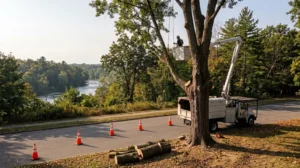
| Over 50% Canopy Loss | Complete vascular failure; brittle wood core. | Immediate Removal Required | Mechanical dismantle via bucket truck or crane; tree cannot recover. |
5 Warning Signs of Severe Emerald Ash Borer Damage
Property owners in Niagara Falls, Lockport, Lewiston, and Wheatfield should inspect their ash trees for these five definitive field indicators:
- D-Shaped Exit Holes: Emerging adult beetles chew distinct 1/8-inch, flat-topped “D”-shaped holes through the exterior bark.
- S-Shaped Larval Galleries: Peeling back dead bark reveals winding, serpentine feeding trails packed with sawdust-like frass on the sapwood surface.
- Epicormic Sprouting (Water Sprouts): In a desperate attempt to survive, a dying ash tree produces dense clusters of suckers and small branches directly from the base of the trunk or lower root flare.
- Heavy Woodpecker Flecking: Woodpeckers strip outer bark flakes away (“blonding”) to feed on borer larvae, leaving bright, light-colored patches visible from the ground.
- Vertical Trunk Splitting: As larvae chew through the cambium underneath, the outer bark loses its connection to the tree, drying out and splitting vertically along the trunk.
The Hidden Danger: Why Dead Ash Trees Snap Without Warning
Untreated ash trees do not rot slowly like native oaks or maples; they undergo rapid structural embrittlement.
- Loss of Moisture and Elasticity: When EAB larvae sever the vascular system, ash wood dries out rapidly while standing. The wood grain loses all tensile strength and elasticity.
- The “Ash Snap” Phenomenon: Compromised ash trees rarely fall from the root base during initial failure. Instead, they snap violently mid-trunk or drop massive primary limbs during mild wind gusts or light freezing rain.
- Climber Safety Hazards: Certified tree workers cannot safely climb dead ash trees using traditional spikes and friction ropes. The inner wood cannot support a climber’s weight, requiring specialized bucket trucks or heavy crane setups that increase removal costs the longer homeowners wait.
Cost Comparison: Long-Term Treatment vs. Complete Removal
Deciding whether to save or cut down a mature ash tree comes down to a direct comparison of structural risk and recurring investment:
Ongoing Systemic Trunk Injections
- Average Cost: $10 to $15 per diameter inch measured at breast height (DBH). A mature 24-inch ash tree costs roughly $250 to $360 per application.
- Schedule: Treatments must be repeated every two years indefinitely.
- Effectiveness: Injections using emamectin benzoate deliver an effective kill rate against larvae if applied while the canopy is healthy.
- 10-Year Estimated Cost: $1,250 to $1,800.
Complete Tree Removal & Disposal
- Average Cost: $800 to $2,400 depending on tree height, proximity to structures, and current brittleness.
- One-Time Investment: Eliminates recurring chemical costs and removes all future liability of structural collapse onto homes or power lines.
- When It Makes Sense: Ideal for trees already exceeding 30% canopy dieback, trees located within strike distance of roofs or driveways, or low-value yard specimens.
Environmental and Disposal Regulations in Niagara County
The New York State Department of Environmental Conservation (NYS DEC) maintains strict oversight regarding wood movement to prevent further pest dissemination:
- NYS Firewood Transport Rules: Untreated firewood cannot be moved more than 50 miles from its source of origin under New York State law. Leaving cut ash wood on-site for personal firewood use is legal, but transporting unchipped logs across regional lines is restricted.
- Green Waste Processing: Municipal facilities in Niagara County require ash branches to be chipped through commercial wood chippers to destroy larvae before wood chips can be composted or repurposed.
Evaluate Your Ash Trees Before They Become Unsafe
Waiting until an ash tree completely loses its canopy dramatically increases the risk of property damage and inflates removal costs due to dangerous, brittle wood. If you have an ash tree showing canopy thinning, bark cracks, or heavy woodpecker activity, schedule an on-site structural evaluation with the certified crews at Niagara Falls Tree Removal through our contact page.